
Maria Montessori described adolescence as a time when the young person must begin to enter the world of adult work. She proposed that schools for this age group should include opportunities for real economic activity, such as managing a small farm, store, or any other small business.
“As she wrote, “The shop, the workroom, the garden, are not merely occupations; they are environments where the adolescent experiences the meaning of life through real work.””
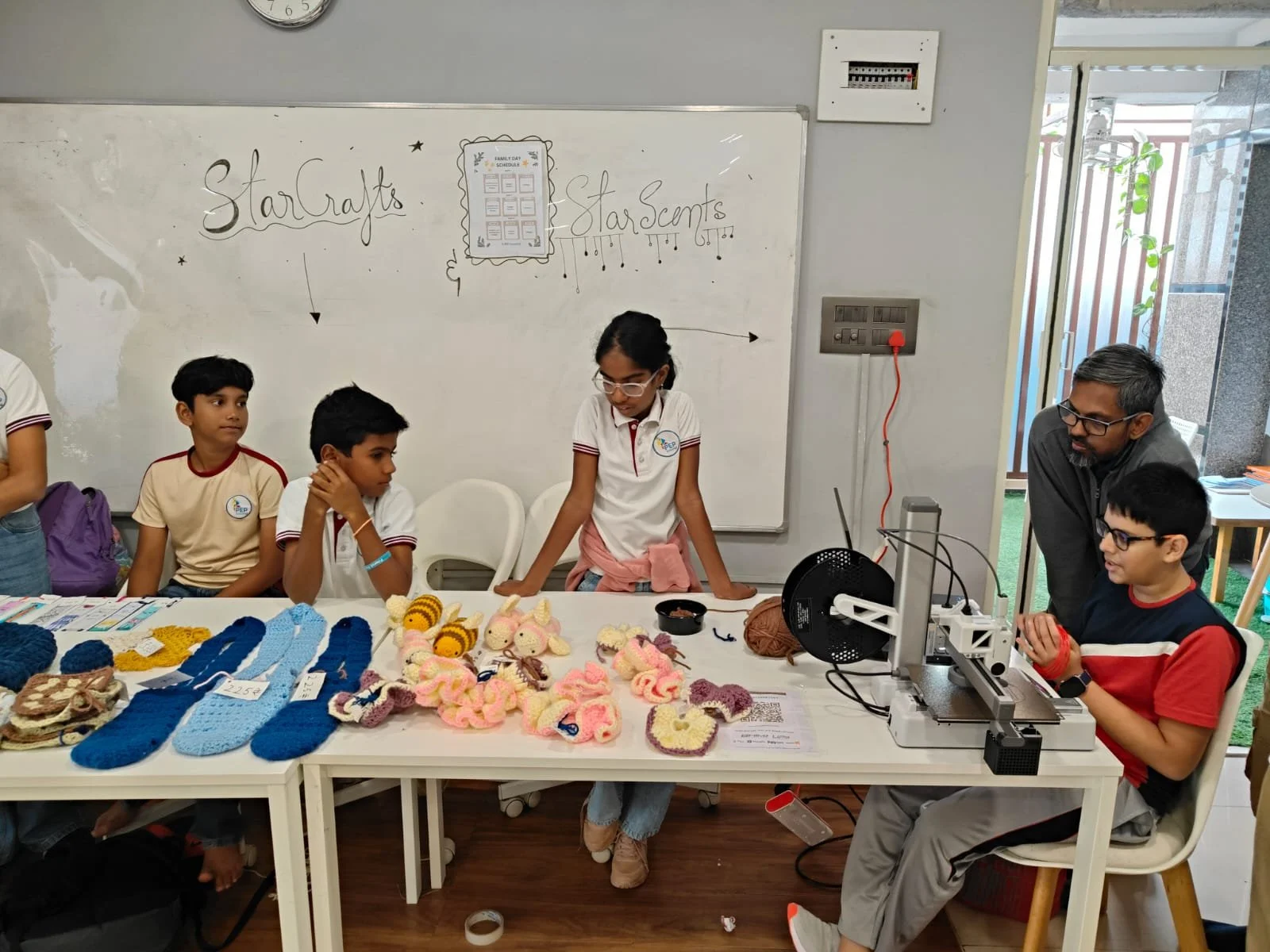
Students displaying their handcrafted products on a family day.
In our Montessori Adolescent Program, this vision comes alive through StarCrafts and StarScents, student-run enterprises by our 6th and 7th graders. Like any real business, rhythms emerge: quieter weeks of steady production and planning, intense bursts as sales days approach, and natural ebbs afterwards.
A menu card displaying all the products made & being sold by the students on Family Day.
The purpose remains clear: adolescents discover what adult work actually feels like, collaborating, identifying how they can contribute, and doing so sustainably. Inspired, we brought a couple of looms into the classroom and began experimenting with weaving. After discussions, the first student enterprise StarCrafts was born. Many had already learned crochet in their elementary school days; now they honed their weaving skills more seriously, creating trial scarves and refining their technique before formally launching in February 2025.
Students presenting their handcrafted soaps, ready to sell.
In some domains, the maturity was striking. Students built their own website, planning product catalogues and organising photo shoots. A new batch of adolescents in June brought fresh energy and a second enterprise: StarScents, focused on soaps and (soon) candles. Students researched soap-making and experimented with recipes. They sourced materials, then set prices through group discussions about costs, effort, and fair profit margins. The school provided initial capital; now, students reinvest their sales income.
A glimpse of the Enterprise’s Substack where the students market their products and document the behind the scenes process.
Adolescents formed three teams: Production, Communication, and Operations, based on their preferences, with everyone spending time in Production first to understand the work. Adults established basic structures such as safety norms, production plans, and bookkeeping, then stepped into a consulting role, leaving daily decisions to students. The work delivered real mistakes and real consequences. They struggled to meet deadlines and had to apologise to customers. In StarScents, one early soap batch melted at room temperature; students had to investigate why and adjust their formula. At times, they ran out of materials when demand exceeded forecasts and scrambled for alternatives. Different strengths emerged: meticulous handwork, flair for design, ease in talking to unfamiliar adults, or calm coordination behind the scenes.
Students interacting with customers on family day.
“Their first customers were parents.
”Parents will come to school, and
their children will ask them to
buy!” the adolescents joked while
planning their first sale.”
Behind the scenes, we see quieter shifts: students who once hesitated to speak to adults now explain products confidently; others discover they enjoy writing product descriptions or social media posts. Through StarCrafts and StarScents, our adolescents experience the full cycle of work: learning a skill, practising until it becomes craftsmanship, offering it to real customers, and reflecting on what to do differently next time.