
Key-facts table
| Ages | Entry from 15 months to 2.5 years |
|---|---|
| Campuses | PEP HSR, ACCEL PEP Whitefield, Ribbons PEP Varthur, Ribbons PEP Sarjapura, PEP Kokapet |
| Approach | Montessori: practical life, language, movement, independence |
| Settling-in | Gradual and individual, with an acclimatization meeting first |
| Daycare | Available for enrolled students |
| Transport | Select routes, school-operated buses |
| Admissions | Open · Enquire about Toddler |
This film shows the Toddler environment in action: how children build trust with their educators, what settling-in actually looks like, how educators respond to biting and big feelings, how each child's progress is tracked through daily observation, and how readiness for Primary is recognised. Parents also share what changed at home.

We Foster Independence
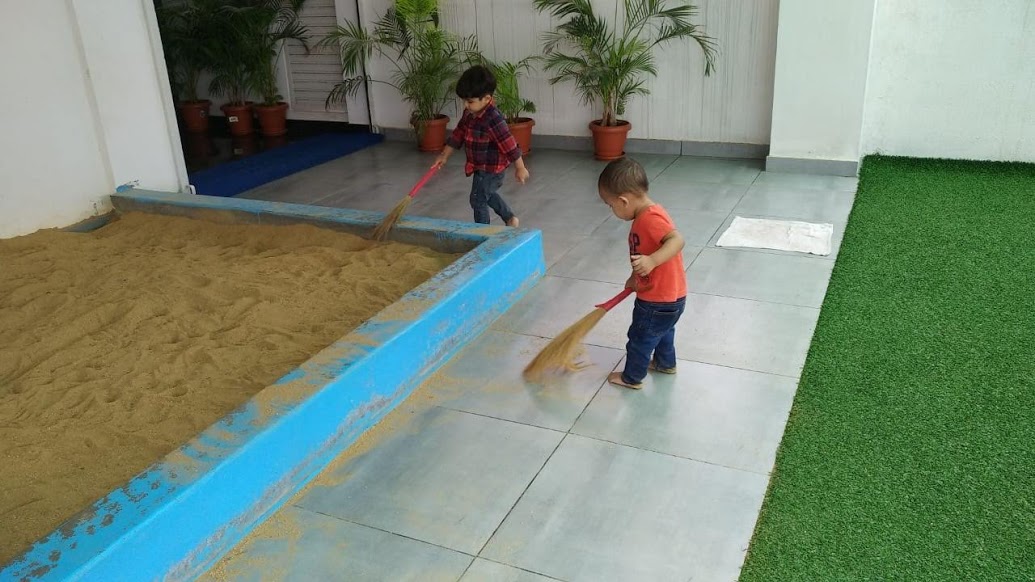
A Do-it-Yourself culture
Toddlers often are in a frustrating position: they want to do things for themselves, but do not know how. Many tantrums can be avoided by enabling a child to do things for himself at a time when he is eager to do so.
In the Toddler Program, a toddler spends a large amount of time learning the self-help skills that lead to independence from constant adult help. In our classrooms, we offer endless opportunities to practice and master everyday tasks, thus giving them a sense of accomplishment and pride.
Inculcating personal responsibility
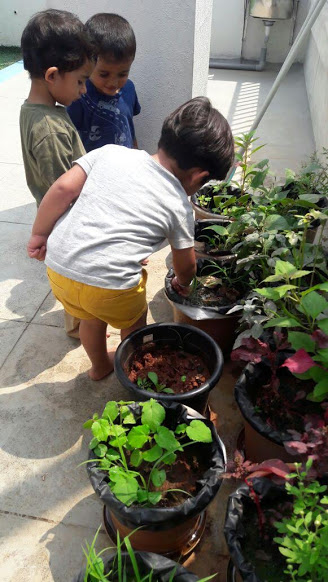
In order to become responsible for themselves, children learn the art of self-care. This includes tasks like managing their own belongings, setting up their snack tables and feeding themselves, wiping their noses, washing their hands at appropriate times, and so on.
Further, we work closely with parents to help toddlers graduate out of diapers with a positive toilet training experience done the Montessori way.
AN ORDERLY Environment
Montessori recognised that young children are very sensitive to both physical and psychological order. Emotional outbursts in toddlers are often results of being overwhelmed by disorder around them.
We support this need with a carefully prepared, child-sized and very orderly environment. Children can access everything they may need, independently. Further, daily routines are consistent — a child knows, every day, what to expect and when.

We Develop Skills
Language development
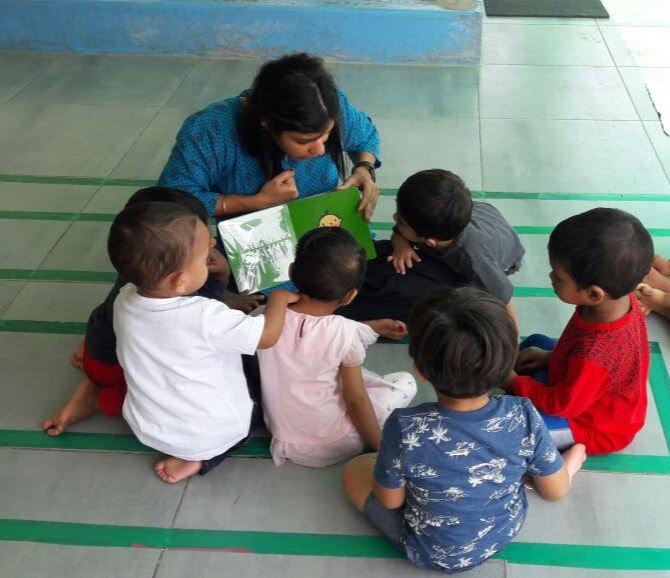
Toddlers are ripe for the development of language, with a special sensitivity to absorb language they hear around them.
The Toddler Program supports this development through a variety of custom designed language materials to expand vocabulary. Further, spoken language development is encouraged through group activities, guided conversation, modelling, vocabulary lessons, reading, and 1-1 interaction.By participating in conversations, listening to stories, classifying objects and learning songs and poems, they nurture their budding language skills.
social skills
In most cases, a child in the Toddler Program is going through a first experience of being a part of a broader community The child is gently encouraged to be a member of this society.
We guide your child to develop the bedrock skills he needs to live together peacefully with other children and adults. Waiting one’s turn, courtesy, care for the environment and patience are important lessons that each child is introduced to. Because children this age have a strong tendency to imitate what they see, our teachers constantly model appropriate social skills, good manners and consideration for others.


We Support Brain Development
Engaging The Hands
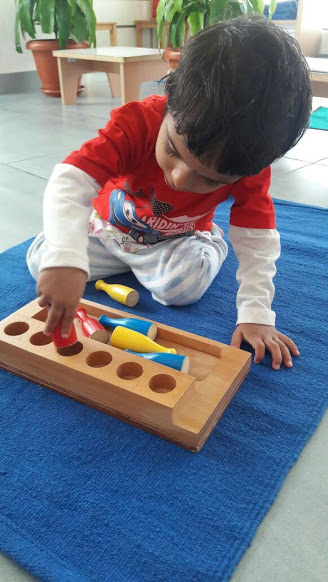
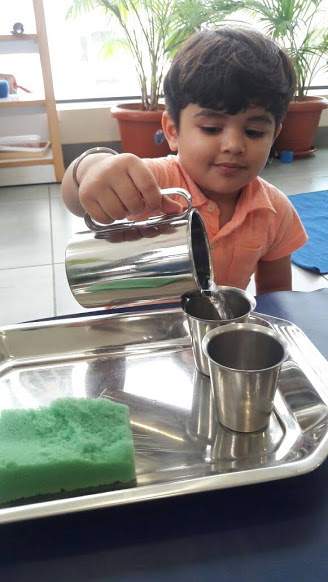
Recent neuroscience research has strongly validated a key Montessori insight: purposeful use of the hands is critical to brain development. Our Toddler Program encourages children to become independent and use their hands in a co-ordinated fashion across a range of practical life activities.
Practical life exercises break down daily tasks into manageable steps, and enable repeated practice to achieve mastery. These include tasks such as transferring, pouring, pounding, hammering, stringing, lifting & carrying, and so on.
Sensory Experiences
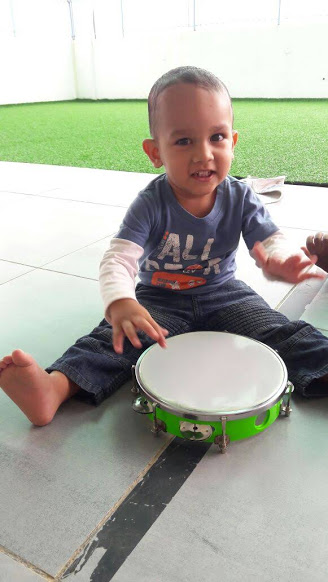
The five senses are the key to helping the brains of young toddlers interpret the world. Sensorial activities offered to the child — often with the help of scientifically designed Montessori materials — aim to develop a child’s awareness through the senses.
As a child gains the ability to quietly attend to his senses, he can move from visual comparisons to differentiating textures, sounds, smells, and weights. Supplementary activities such as food preparation enhance the young child’s awareness of their surroundings and their senses.

"Parents usually ask" section
How does settling-in work, and how long does it take?
We settle each child gradually: an acclimatization meeting with you and your child first, then short classroom sessions that extend as your child shows readiness. Most children settle within days to two or three weeks, and some need longer. That range is normal. We watch your child's cues (reduced crying, brief moments of engagement) and extend time only when they're ready.
What if my child has never been away from me, or has intense separation anxiety?
Separation anxiety is a normal part of development and a sign of a healthy bond. For children who struggle intensely, we tailor the approach: extra acclimatization visits with you present, a consistent primary adult staying close in the classroom, and no forcing of engagement. One thing we coach parents on: avoid phrases like "I'll be waiting right here" that create false expectations. A brief, confident goodbye, done the same way every day, works far better than a long one.
What will my toddler actually do all day?
Real, purposeful work in a carefully prepared, child-sized environment: practical life (pouring, transferring, stringing, food preparation), language through vocabulary lessons, one-to-one interaction, songs and poems, sensory work with textures, sounds, smells, and weights, and care of themselves and their environment. It looks simple; it's how toddlers build concentration, coordination, and confidence.
Do you help with toilet learning, diapers, food, and allergies?
Yes, this is a partnership. Tell us how things work at home (food preferences, allergies, nap rhythms, where your child is with toilet learning) and we align the school routine with it. Independence in eating, dressing, and toileting is built into the toddler program itself.
Who will be with my child in the classroom?
Multiple adults, with the strongest adult support in the youngest environments. During settling-in, a consistent primary adult stays close to your child, offering reassurance without forcing engagement, every day, so your child knows exactly who their anchor is.
Can my 2.5-year-old skip Toddler and go straight to Primary?
We usually recommend the Toddler environment first for children new to school, even developmentally advanced ones, because it's designed for a child's first-ever transition away from home: socialisation, emotional security, and independence at their pace. If your child shows readiness for more, early Primary materials are offered within the Toddler environment itself. The right entry point is decided together during admissions.
Is daycare available for toddlers?
Yes, for enrolled students. Timings vary by campus and are shared during the admissions conversation.
More questions? See the full Toddler FAQs, or book a visit and ask us in person.

Enquire about the Toddler Program
Timings
Vary by campus; shared during the admissions conversation.
Daycare and extended care
Available for enrolled students (not offered as a standalone service).
Transport
Select routes via school-operated buses. Our own buses and staff, not outsourced.
Food
Children bring food from home; allergy plans are agreed individually.
Last updated: August 2026.