
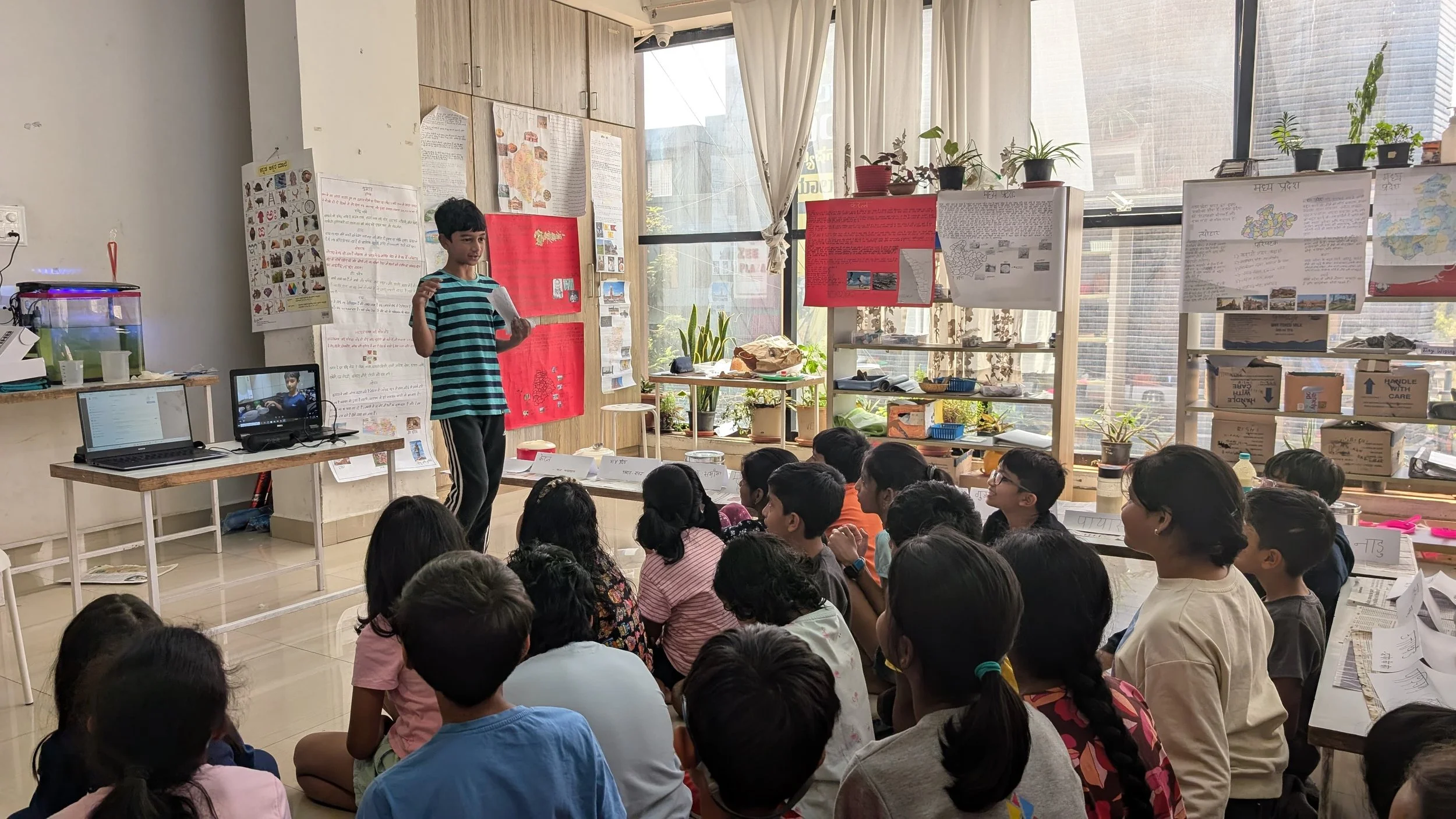
What does assessment look like at PEP?
Most schools measure learning through tests, marks, and grades. At PEP, we measure it differently. In the early years, most learning is observed. In the Montessori primary classroom, children work with materials that include control of error, cues that show when something is not right. A knobbed cylinder that does not fit or a bead chain with a missing number guides the child to notice and correct. The teacher watches closely: Which lessons has this child received? How do they practice? Where do they persevere or hesitate?
“As one elementary teacher puts it, “My job is to notice the quiet patterns in a child’s work, not just the loud moments of success or struggle. “
”
From the preschool years onward, we also conduct simple reading benchmarks one-on-one. A teacher might discover that a child who seems confident is still guessing words. That insight can change the next week: targeted phonics lessons, a new set of books, and more time reading together.
Do you use any formal testing?
Yes, but not the way most parents remember. From the elementary years onward, we use standardised assessments in maths and English. These are administered quietly without cramming, and children do not see their scores. To them, it is part of the day. Teachers use results to complement observation and refine their work. We do not share raw scores with parents. Instead, we share whether a child is on par, needs support, or is ready for challenge.
What if my child needs extra support or more challenge?
We track whether children meet key benchmarks in reading, writing, and maths. When a child is behind, we add targeted lessons and meet with parents to plan support. When a child shows promise, we offer deeper projects or enrichment. For the child, this doesn't feel like being "labeled"; it feels like being seen.
What about preparation for future exams?
We know that, sooner or later, our students will meet formal exams. In India, board exams and entrance tests carry enormous weight. We don't shy away from this reality. But here, we make an important distinction: learning a subject well and performing well on exams are two different skills. We treat exam-taking as a skill. In the younger years, written assessments are rare. By middle school, students experience low-stakes quizzes and timed tests. Through varied formats, they learn tactics: how to approach questions, manage time, structure answers, and stay calm. But we keep this separate from teaching. Lessons focus on understanding and curiosity. When exam preparation begins, we shift gears deliberately. This separation is intentional. Doing well on an exam doesn't necessarily mean you understand the subject deeply, and understanding a subject deeply doesn't automatically make you skilled at exams. We want our students to develop both, without confusing one for the other.
Without grades, where does motivation come from?
In a Montessori environment, we want motivation to grow from within. Younger children watch older peers working on advanced materials and naturally want to join them. Older children measure themselves against their own past efforts: "Last term this was hard; now I can do it. " Progress, not comparison, becomes the story. Collaboration sits at the heart of our approach. Our promise is simple: assessment at PEP will always serve your child's growth, never the reverse.